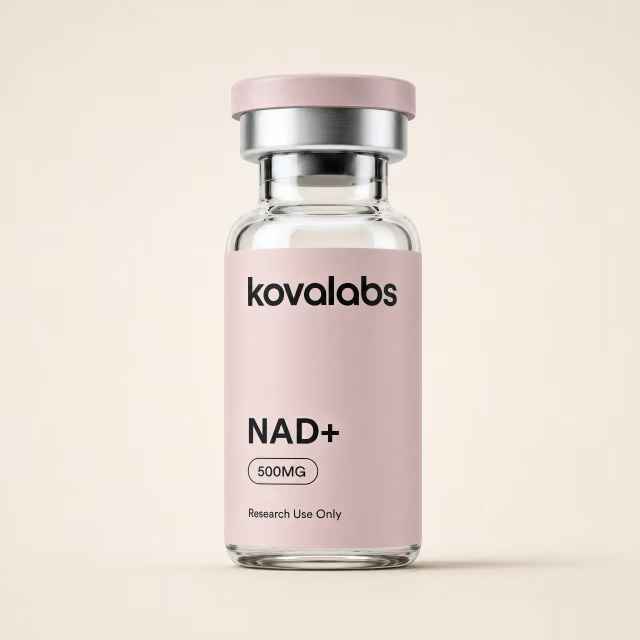
NAD+ (nicotinamide adenine dinucleotide) is a coenzyme studied in research into cellular-energy metabolism and sirtuin-pathway signalling in experimental models.
- Purity >= 99% (HPLC)
- Supplied as a lyophilised powder
- Independent batch identity and purity testing
- For laboratory research use only; not for human or veterinary use
What is NAD+?
NAD+ (nicotinamide adenine dinucleotide) is a coenzyme found in every living cell, built from a nicotinamide nucleotide joined to an adenine nucleotide. It is a central carrier of electrons in redox reactions, cycling between its oxidised form (NAD+) and reduced form (NADH). Its molecular formula is C21H27N7O14P2 and its molar mass is 663.4 g/mol.
It is not a peptide and it is not a hormone. NAD+ is one of the most studied small molecules in cellular biochemistry, which is precisely why the marketing noise around it tends to outrun what the literature actually establishes. Kovalabs supplies it as a defined research chemical, nothing more.
Is NAD+ a peptide, and how does it differ from NMN?
No. NAD+ is a dinucleotide coenzyme, not a peptide (peptides are short chains of amino acids). It is also distinct from NMN (nicotinamide mononucleotide) and NR (nicotinamide riboside), which are biosynthetic precursors that sit upstream of NAD+ in metabolic pathways. The three are routinely conflated in consumer copy; for research purposes they are different molecules with different identifiers, and only NAD+ carries CAS 53-84-9 and PubChem CID 5892.
Is NAD+ legal in the UK?
NAD+ is an endogenous coenzyme and is not a controlled drug under the Misuse of Drugs Act 1971. Kovalabs supplies it strictly as a research chemical for laboratory and analytical use only. It is not a medicine, not a supplement, and cannot be sold or supplied for human or animal consumption. The buyer is responsible for ensuring lawful handling, storage and use in their jurisdiction. Full terms are set out in our research disclaimer.
How is the identity and quality assured?
Identity and purity are confirmed against published identifiers, not asserted on the label. Each batch is supplied with a third-party Certificate of Analysis confirming a minimum of 99% purity by HPLC. The material is characterised against its published identifiers: CAS 53-84-9, PubChem CID 5892, molecular formula C21H27N7O14P2, molar mass 663.4 g/mol, InChIKey BAWFJGJZGIEFAR-NNYOXOHSSA-N. These let an independent lab confirm that what arrived matches what was ordered. Batch documentation is available via our Certificates of Analysis.
What does the research on NAD+ investigate?
NAD+ is studied as a coenzyme in cellular energy metabolism and redox balance, and as a substrate for enzyme families such as sirtuins and PARPs. None of this establishes an outcome in humans. The full mechanistic and study-design context lives in our monograph: NAD+ as a coenzyme: what the research investigates.
Synthesis and supply
NAD+ is supplied as a lyophilised research chemical and may be reconstituted for laboratory work using an appropriate solvent such as bacteriostatic water. Researchers comparing redox cofactors and cellular-pathway tools may also be looking at glutathione, SS-31 or epithalon, and the full range sits in our cellular research category.
Reviews
There are no reviews yet.